
Accessible pipe repair, $200–$500
A burst you can point at, exposed pipe in a garden, garage or accessible wall, cut out and repaired in business hours.
Water finds the ceiling fast and the cause slowly, the wet patch is almost never over the split. We shut it down, trace the failure to its source, and repair the pipe rather than bandaging the symptom. Around the clock across Epping and the Northern Suburbs.
The pipe generations tell the story. Epping’s older housing carries mid-century copper that pinholes from the inside as decades of water chemistry thin the wall; galvanised steel that rusts at every thread until a fitting surrenders; and somewhere in most renovated homes, a junction where three eras of pipework meet, original metal, nineties plastics, modern PEX, each joint a small bet that has to keep paying off. High mains pressure across parts of the Northern Suburbs collects on those bets eventually.
What makes bursts genuinely tricky is that water lies about its address. It tracks along pipe exteriors, rides joists and wall plates, and surfaces downhill: a stain in the lounge from a split above the laundry. Open the ceiling at the stain and you find wet plaster and no pipe. So we do not guess: the line gets traced back to the actual failure, the failed section comes out, and the repair is pressure-tested against the mains before a single sheet of plaster goes back.


Epping’s interwar and Federation homes still run original clay lines that crack and sag with age, trapping waste and slowing flow.
Most heritage-era houses are a layered record of every plumber who has worked on them: original galvanised in the untouched parts, copper from a seventies bathroom, and modern pex from whatever was done last.
That matters because a burst tells you about one section, not the house. We will say which era failed and whether the rest of that era is still in service, which is the difference between a repair and an informed decision about the next five years.
Water appearing through your ceiling is one of the few plumbing situations where the fault is definitely not yours and the damage definitely is.
Epping’s station-precinct towers share drainage stacks where grease, wipes and food waste build up and back multiple units up at once.
Get the water isolated upstairs if anyone is home, photograph everything before it is touched, and notify the building manager in writing the same night. Our report names the source lot and the line, which is what your insurer and the owners corporation both need before anybody pays for anything.
The suburb’s leafy older streets have mature trees whose roots invade cracked clay sewers, a leading cause of slow drains here.
Not every escape of water is a burst pressure pipe. A cracked or collapsed drain leaks too, slowly, without a pressure drop, and often for months before anything shows.
The distinction matters because the repairs are different jobs at different prices. A pressure leak shows on the meter with every tap closed; a drain fault does not, and it is found with a camera rather than a listening device.
Homes plumbed before the 1960s were run in galvanised steel, which corrodes from the inside out. The wall thins invisibly for decades while the bore narrows with rust, so the first symptom is usually poor pressure rather than a leak.
When it finally goes, it goes at the thinnest point rather than the most convenient one. If your pressure has been declining and the water runs brown after the house has sat empty, that is the pipe telling you what it is made of.
Epping (postcode 2121) sits in Sydney’s Northern Suburbs, bordered by Eastwood, Carlingford, North Epping and Beecroft. A wave of apartment towers around the station now sits beside leafy streets of older homes, giving its drains two very different sets of problems, and we handle both.
The line is broadly the same as for drains: pipework serving only your lot is yours, and anything serving the building, risers, mains, common-property pipework, belongs to the owners corporation.
Where it gets argued is damage. A common-property pipe that damages your contents usually engages two policies, and the way to keep that simple is contemporaneous evidence. We document time, source and cause on the night for exactly that reason.
A burst you can point at, exposed pipe in a garden, garage or accessible wall, cut out and repaired in business hours.
Adds careful access and tracing the water back to the real split before repair.
Locating equipment, access through concrete or excavation, or a reroute around the slab. The camera and leak gear keep the hole small.
Nights and weekends run roughly $180–$250/hr against $120–$160 in daylight, plus the call-out. Shutting the meter and waiting for morning is sometimes the smart money, we will say so.
Professional leak detection for the first hour, before anything is opened up. Cheaper than exploratory holes in three walls.
Every repair is pressure-tested before we leave, and the workmanship carries a lifetime warranty. Figures here are indicative of the 2026 Sydney market rather than a quote from us, you get your own number as a fixed price before any work starts.
Meter valve clockwise: we walk you through it on the phone, and the flood stops before the van starts. On site we isolate just the injured line when the layout allows it.
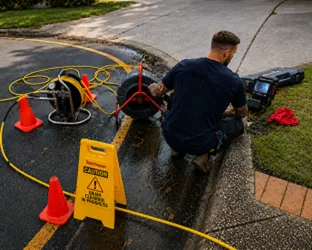
Acoustic listening, thermal imaging and section-by-section pressure testing find the actual split, which is rarely under the wet patch.

The damaged section is removed and replaced properly. If what we expose says the whole run is finished, you hear it straight, with prices for both roads.

Mains-pressure test before anything closes. The repair demonstrates itself; then, and only then, do surfaces go back.
Shut the meter valve, then call. We will talk you through making it safe while a crew heads your way.
What people ask us with the water off, answered before you need them.

One fixed price, one properly repaired pipe, one pressure test you watch pass. That is the whole offer.

Leave your details and our local Epping team will call you back fast.