
Hoses & connectors: $100–$200
The brittle old flexible behind the cooktop: tiny part, outsized share of the leaks we find.
There is no "close enough" in gas. Every job we do in Epping, a leak chased down, a cooktop connected, a new line run to an outdoor kitchen: finishes the same way: holding pressure on a gauge, certified, documented. That is the whole standard, and it is not negotiable.
NSW reserves every gas task, down to connecting an oven, for licensed gasfitters, and the logic is unsentimental: plumbing mistakes stain ceilings, gas mistakes burn houses and poison air. The leaks we attend have a recurring origin story, and it is rarely the pipework’s idea, it is a confident DIY connection or a handyman’s thread tape, discovered later by someone’s nose.
What the licence actually buys is the ending: the whole installation held against a manometer until the needle refuses to move, every appliance checked for a clean blue burn and honest ventilation, and the work done to AS/NZS 5601, the clause your insurer reaches for when something ever goes wrong. Across Epping and the Northern Suburbs, no gas job of ours skips that ending.


Every job finishes on a pressure test with a certificate. Gas has no visible half-finished state: an installation either holds and is certified, or it is not complete.
Gas in a commercial kitchen is a different regime from a domestic one, interlocked ventilation, larger loads, appliance isolation requirements, and inspection obligations that fall on the operator rather than the plumber.
The practical consequence is that a commercial installation cannot be extended casually. Adding a wok burner changes the load, the ventilation calculation and the certification, and all three have to move together.
Epping’s interwar and Federation homes still run original clay lines that crack and sag with age, trapping waste and slowing flow.
Older properties routinely have redundant gas pipework, a disconnected heater, a removed stove, a fireplace converted decades ago: and it is not always capped to any standard, or capped at all.
Those are found by pressure testing the whole installation rather than the part in use. It is the single most common reason an old house fails a test, and it is usually inexpensive to put right once located.
Epping (postcode 2121) sits in Sydney’s Northern Suburbs, bordered by Eastwood, Carlingford, North Epping and Beecroft. A wave of apartment towers around the station now sits beside leafy streets of older homes, giving its drains two very different sets of problems, and we handle both.
In a block, the supply to the building and the risers are common property; the pipework and appliances inside your lot are generally yours. Individual meters may sit in a common meter room, which frequently confuses the question of access.
Establish it before arranging work. Anything on common property needs the owners corporation to authorise it, and a plumber cannot simply proceed because a resident asked.
For a food business, gas is production. A cooktop out of service is not an inconvenience to schedule around, it is a menu that cannot be served.
So we carry the common commercial failure parts and we work to your service times rather than ours. Where a part genuinely has to be ordered, you will hear that immediately along with what can be kept running in the meantime.
Leave the building. Take everyone with you. No light switches, no appliances, no phone calls made inside: a switch operating is an ignition source.
From outside, call 131 909. That is the gas network's emergency number, staffed twenty-four hours, and they attend and make the supply safe at no cost to you. Once it is safe, a licensed gasfitter finds and repairs the fault on your side of the meter.
Correct combustion is blue and steady. Yellow, lazy or lifting flames mean the air-to-gas ratio is wrong, a blocked jet, a starved supply, insufficient ventilation, or an appliance set up for a different gas type.
It is the one diagnostic anyone can do without equipment, and it is worth a look at every gas appliance in the house once a year.
The brittle old flexible behind the cooktop: tiny part, outsized share of the leaks we find.
Thread and valve leaks sealed properly and proven again on the gauge.
Corroded or damaged sections replaced; concealed lines with access work run $800–$2,500.
Connected, tested, certified. New line or bayonet to reach it quoted fixed on top.
Sydney's 2026 licensed-gasfitter range; attendance typically $80–$150. Certification is included, because without it there is no job.
Every gas job ends with a pressure test and the paperwork that proves it. Figures here are indicative of the 2026 Sydney market rather than a quote from us, you get your own number as a fixed price before any work starts.
Suspected leaks start with the supply off at the meter and air moving through the space. Diagnosis begins only after the installation stops feeding the problem.
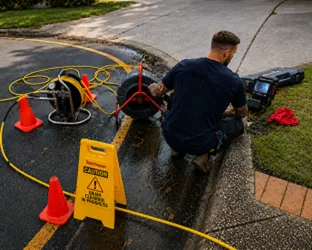
A manometer says whether the system is losing gas; detection fluid and instruments then walk the installation to the guilty joint, fitting or run.

The failed component comes out and compliant material goes in, to AS/NZS 5601, whether that is one connector or metres of rerun line.
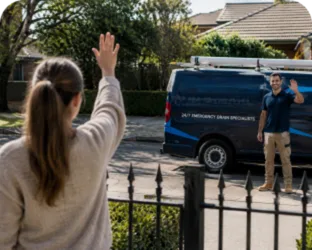
The full installation holds on the gauge or we are not done. Appliances relit, flames checked blue, ventilation confirmed, compliance documented.
Nor should it, legally. One visit: connected, tested, certified, warranty intact. The proper way is also the cheap way, counted honestly.
Licensed, pressure-tested, documented: every time. Smelling gas this minute? 131 909 from outside comes first.

Leave your details and our local Epping team will call you back fast.